
How many enemy types Enshrouded 1.0 adds, which factions got new variants, and how the reworked damage susceptibility system changes fights.
Enshrouded Enemy Types in 1.0: All 37 New Foes and Variants
1.0 adds 37 new enemies to Embervale, and the split behind that number is the useful part. A completely new faction native to Cinder's Cradle contributes 14 new enemy types, and the remaining additions are variants added to the factions you already know, including the Fell and the Scavengers. On top of the new bodies, the patch reworked damage susceptibility for a large number of enemies and changed how the game tells you that your damage type is working.
Enshrouded is the survival action RPG from Keen Games, sold on Steam for PC and the PlayStation Store for PS5. The official site hosts the launch material.
The short version:
- 14 new enemy types arrive in a brand-new faction in Cinder's Cradle.
- Another 23 new faces are variants added across the existing factions, for 37 total.
- Some of the new variants are elite or heavy class, so expect tougher encounters in old biomes.
- Damage susceptibility was reworked per faction, and elite and heavy enemies got more individual personality.
- The floating combat text now only shows Resisted or Effective at a 20 percent threshold.
The 1.0 Enemy Count in Plain Numbers
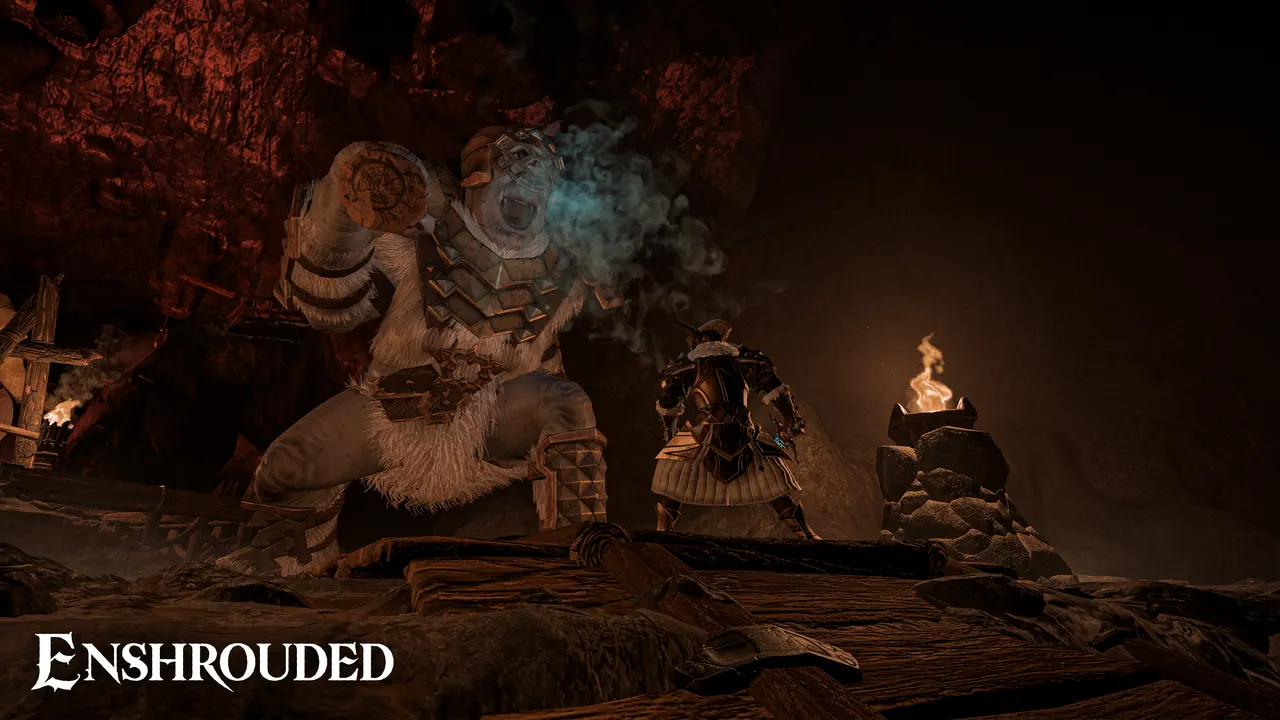
The number to hold onto is 37, and it breaks down cleanly. A brand-new faction in Cinder's Cradle accounts for 14 entirely new enemy types. The rest of the additions are variants grafted onto factions that already existed. Keen's phrasing is that all enemy factions got new variants, some of which are heavy or elite level.
That last part is the warning. A variant is not always a cosmetic reskin. When a faction gets an elite or heavy variant, that enemy can show up in a biome you thought you had outgrown, and it will hit harder than the regular version. The developer's own advice in the changelog is to be on your guard while exploring rather than to assume an old route is still safe.
The new faction also lives in the hardest new region. Cinder's Cradle sits beyond the now-open gates past the Veilwater Basin, and it has two layers: lava wasteland and ruins below, floating islands above. The changelog describes the floating islands as home to unrelenting guardians, which is the developer's way of saying the new faction is not a tutorial faction.
If you are heading there, the bosses guide covers what changes about endgame encounters, and the new spells guide covers the crowd control and area damage that the new enemy density rewards.
The New Cinder's Cradle Faction
Fourteen new enemy types in one faction is a lot for a single region, and it is the reason Cinder's Cradle plays differently from the biomes you already know.
The region is split in two, and the enemies are built around that split. Down in the lava wasteland and ruins, you are fighting in a barren, partly Shroud-covered environment where the terrain itself is a hazard. Up on the floating islands, the architecture is intricate and the fauna is described as unusual, with guardians that the changelog calls unrelenting. That word is doing real work: these are enemies designed to punish a player who treats the islands as a sightseeing stop.
A useful expectation to carry in is that point-of-interest density in Cinder's Cradle is lower than in the central areas. Keen says so directly. That means longer stretches of travel between the encounters that matter, and it means the fights you do get are meant to be worth the walk rather than a steady drip of filler.
The changelog does not publish a name for the new faction, and it does not list the fourteen types individually. Any guide that gives you fourteen named enemies with stat blocks is working from data mining or community testing, not from the official notes.
The new faction sits in the hardest region. Fully upgraded equipment reaches level 55 while players cap at 50, so an upgraded old set usually beats a fresh unupgraded one in Cinder's Cradle.
Official source: Enshrouded 1.0 changelog
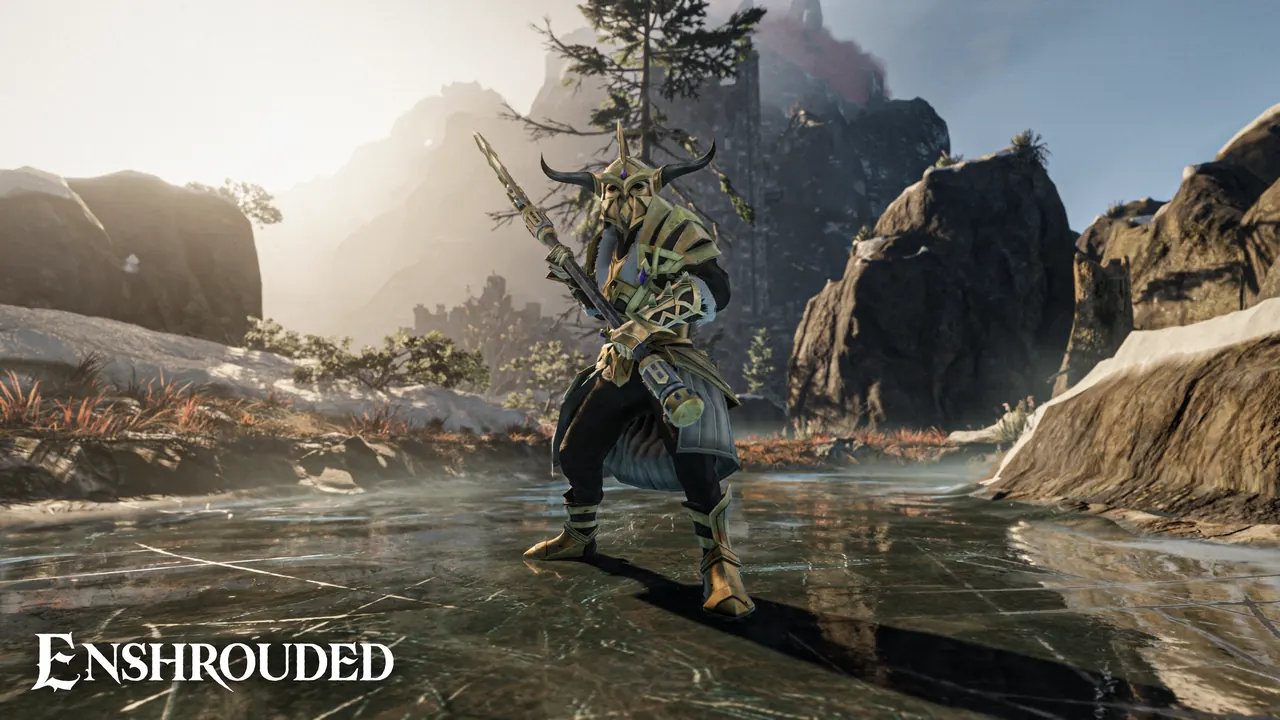
New Variants in Existing Factions
The other half of the 37 is where returning players will feel the patch most, because it lands in biomes you already know.
The Fell and the Scavengers are the two factions Keen names as examples, and the changelog also documents specific tweaks to enemies you have fought before. The Fell got a genuinely funny change: the Fell Confusion Pheromones now affect more Fell enemies, which means friendly fire among the Fell is more common than it used to be. The Fell Fungal Friends also had a bug fixed where their health did not scale with party size in multiplayer, so in a group those fights are now as hard as they were always meant to be.
The Scavengers got a tuning pass aimed at making them less punishing in the wrong way. Some Scavenger Matron attacks had their damage reduced to bring her in line with nearby enemies, with the poison area attack specifically toned down. Scavenger night patrols had their damage cut to roughly 60 percent of what it was. Both changes reduce the chance that a random night encounter deletes a player who was not looking for a fight.
Two more changes are worth knowing because they alter what an enemy is. Snapjaws in the Veilwater Basin are now classified as wildlife rather than Drak, which changes how they fit the world and the faction systems. Fell Vultures now drop more Enshrouded Vulture Talons, which matters because those talons feed the next Flame level, and combat against vultures was improved overall.
A handful of smaller fixes show the same attention to old enemies. The Shroud Flayer's Heart had a behavior bug fixed so it reacts correctly when attacked, and Blackmire Snapjaws had their emerge-from-the-ground positions cleaned up so they stop surfacing in awkward spots.
There is also a loot-side change that affects every enemy you kill. Enemies no longer drop water pouches, and they now have a chance to drop rings instead. All heavy class enemies, old and new, got head trophies, so trophy collectors have more to chase across the whole map.
Damage Susceptibility and Why It Matters Now
The change most likely to alter how you actually fight is the rework of enemy damage susceptibility, and it comes with a readability fix that finally makes resistances usable in the middle of combat.
Keen reworked susceptibilities for a large number of enemies with two goals. The first is consistency by faction, so that damage types behave predictably against a family of enemies instead of varying for no visible reason. The second is personality for the individual: elite and heavy class enemies got more distinctive resistances so that a big enemy feels different from a small one of the same faction.
The readability fix is the 20 percent threshold. Before 1.0, the floating text over a hit enemy could show both Resisted and Effective at the same time, which made the feedback useless. Now Effective only appears when the enemy is at least 20 percent susceptible to your damage type, and Resisted only appears when the enemy is at least 20 percent resistant. Small differences stay quiet, and the labels mean something when they show up.
For a practical read: if you see Effective, keep doing what you are doing. If you see Resisted, switch damage type or switch target. If you see nothing, the matchup is close to neutral and you should judge by the health bar rather than by the text.
The same patch also made weapons more varied in this respect. The weapons found specifically in the Hollow Halls were reworked to work particularly well against the Hollow themselves while staying effective outside the dungeon. If you have not revisited your Hollow Halls loadout since Early Access, the Hollow Halls guide covers the change.
Susceptibilities were reworked across a large number of enemies in 1.0. If you are running a damage-type list from an Early Access guide, verify it in game before you build around it.
Enemy AI Changes in 1.0
The changelog describes the AI work as making enemies a bit smarter, better at navigating complex environments, and more convincing as adversaries. Several specific changes show what that means in practice.
Enemies now actually search for players when they hear something, instead of the game handing them your position. Line-of-sight checks were improved so their decisions are more consistent, and enemies should now come to join a fight when their fellows are already engaged nearby. Pathfinding for enemies trying to return home after chasing you across unknown territory was also improved.
Height awareness got a fix that matters for anyone who fights from ledges. Melee enemies now better judge their height relative to their target and will try to walk up, walk down or jump to reach you. The changelog is blunt about the consequence: having the high ground may no longer be enough on its own.
Two changes cut the other way and make combat feel better. Enemies used to be staggered for too long after being hit, and they now recover faster and can counter-attack sooner. Flying enemies also now react as intended when attacked from very far away, and their loot drops correctly when killed at range. Hovering and swimming enemies had their position control fixed so they stay where they belong relative to the ground.
One quality-of-life change sits outside combat. Tutorial enemies are now guaranteed to spawn even when enemy density is set to few in the world settings, so a new player cannot accidentally switch off the encounters that teach the game.
How to Read Resistances in Combat
Turn the reworked system into a habit and the fights get easier. The loop is short.
Watch the floating text. Effective at 20 percent or more means commit. Resisted means stop and change something. Nothing means neutral, so read the health bar.
Match your damage type to the faction when you can, because consistency by faction was the explicit design goal. Then look at the enemy class. Elite and heavy enemies have more individual resistances now, so the type that shreds a faction's basic troops might be the wrong answer for its champion.
Carry a backup damage type. The 1.0 susceptibility rework rewards switching, and the new wand heavy attack that pierces enemies plus the new area spells give you more ways to change the shape of your damage mid-fight. If you want the gem side of the same idea, the weapon gems guide covers which gems changed.
Finally, remember that enemies recover health over time once you leave combat instead of resetting instantly. That cuts both ways. It punishes a long disengage, but it also means a boss you nearly killed stays wounded if you re-engage quickly.
FAQ
How many new enemies does Enshrouded 1.0 add?
- A new faction in Cinder's Cradle brings 14 new enemy types, and the remaining additions are variants across the existing factions, including the Fell and the Scavengers.
Are the new enemies only in Cinder's Cradle?
No. The 14 types from the new faction are native to Cinder's Cradle, but the other 23 are variants added to factions that already exist, so new enemies show up in older biomes too.
What changed about enemy weaknesses in 1.0?
Damage susceptibility was reworked for a large number of enemies, with more consistency by faction and more individual resistances for elite and heavy enemies. The floating text now only shows Resisted or Effective at a 20 percent threshold.
Why does my enemy not show Resisted or Effective anymore?
Because 1.0 raised the bar. The label only appears when the enemy is at least 20 percent resistant or susceptible to that damage type. A neutral matchup shows nothing.
Do enemies reset to full health if I leave a fight?
No. In 1.0 enemies recover health over time once you exit the combat area instead of resetting instantly, so a quick re-engage on a wounded boss keeps some of your progress.
Related Guides
- Enshrouded Bosses in 1.0 How the reworked susceptibility and stun systems show up in the endgame fights.
- Enshrouded 1.0 New Spells and Eternal Spells The crowd control and area damage that new enemy density rewards.
- Weapon Gems in Enshrouded 1.0 Which gems changed, so your damage type matches the reworked resistances.
- Enshrouded Hollow Halls Guide The dungeon weapons reworked to hit the Hollow faction especially hard.
More Enshrouded Guides
Enshrouded ranger build for 1.0: Puncture, Barrage and Survival Instinct, the three new Eternal arrows, aim assist settings and the reworked ranger armor tiers.
What Enshrouded 1.0 changed about bosses, including the reworked Albaneve Summits fight, stun tactics, and boss health recovery.
How to reach Cinder's Cradle in Enshrouded 1.0, what the lava ruins and floating islands contain, its 12 new Shroud Roots, and the Flame level to bring.
How crafting works in Enshrouded 1.0: which stations exist, crafting from storage, the Gem Forge and Quick Stash Station, and the recipes the patch rebalanced.
Enshrouded has no crossplay at 1.0, so PC and PS5 cannot share a world yet. Here is how co-op works, the player cap, permissions and progress sharing.
The server tool ships free with the game and is Windows only for now. Config fields, UDP port 15637, user groups and the new Automatic enemy scaling.
An Enshrouded Elixir Well is a Shroud pocket with a Shroud Root at the bottom. What it awards, why it may not reset, and what 1.0 did and did not change.
What the Flame Altar controls in Enshrouded 1.0, the 15 and 16 Altar caps, cheaper Flame level 6 to 9 recipes, and the level 11 Shroud pushback.